
Switching from Conventional to Synthetic

synthetic oil vs conventional oil

When switching from conventional oil to synthetic oil in your outboard motor, there is one central precaution of which to be aware: you can’t switch back. Synthetic oils, like the Evinrude XD100 oil, offer increased performance and are friendlier to the environment. However, synthetic oils also cost more than conventional mineral oil, and it’s important to note that the switch, if made, is permanent. The additives in synthetic oil replace all of those in conventional motor oil, but synthetic oil also contains different molecules. These molecules work to preserve the condition of your engine while synthetic oil is being used, but if mineral oil which doesn’t have these molecules is used after the engine has adapted to synthetic, the absence of the molecules can cause engine damage.

It’s important to make sure you can consistently use synthetic oil if you switch to it, otherwise, you risk permanent engine damage and ultimately, buying a new outboard motor.
Did you like this? Share it:

Outboard Motors for your Dinghy

Outboard Motors for your Dinghy

For times when there isn’t a dock present, it’s nice to have a dinghy to avoid swimming or wading to shore. Rowing out to your boat in your dinghy can be exhausting, and there’s nothing worse than having to row to shore after day of boating. Whether for leaving shore or heading into shore, it’s great to have an outboard motor for your dinghy. Though you will want an outboard motor sized to fit an inflatable craft, maintenance for smaller outboard motors doesn’t differ from your standard boat model. Evinrude outboard motors are great for smaller craft as they’re easy to maintain; you just need to check the Evinrude outboard oil levels every so often, and change the oil filter and spark plugs.

When using your dinghy, ensure your outboard motor is secured to the craft, and that it is submerged correctly in the water. If your dinghy happens to deflate a little, the outboard motor can change levels in the water.

Did you like this? Share it:

Simple Marine Engine Oil Changes

Simple Marine Engine Oil Changes

One of the simplest methods to change the oil in a marine engine is through use of a marine oil pump. Marine oil pumps are made by several different manufacturers, though often the most used are Evinrude oil pumps. Changing the oil on your marine engine or outboard motor is necessary task, but with a marine oil pump it can be accomplished in about 15 minutes. When using an oil pump, the pump attaches to the drain hose of your boat via a small connecter. The oil will drain for about 10 minutes or sometimes longer, and turning on your engine while the oil is draining can speed up the process. If you do turn on your engine, make sure to have a water supply feeding the impeller, and disconnect the propeller before turning on the boat.

Once the oil is drained, simple refill the engine with your choice of motor oil, check to ensure the proper amount of oil is inside, and you’ll be ready to go the next time you take your boat out on the open water.

Did you like this? Share it:

Synthetic and Hybrid Synthetic Oils

Synthetic and Hybrid Synthetic Oils

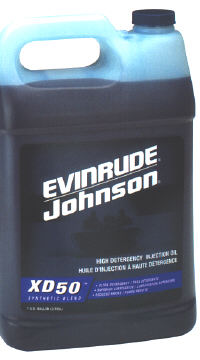
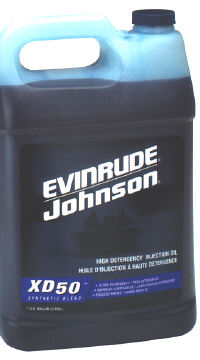
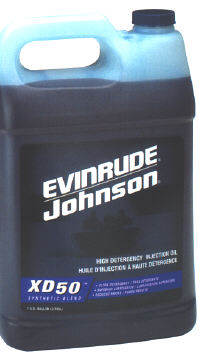
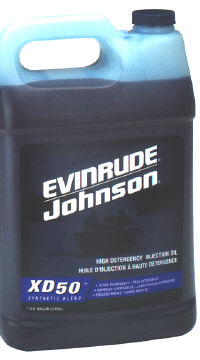
Oil became an ever more precious commodity with the advent of the Industrial Age, and since the early 1900s, with the mainstream production of the combustion engine, mineral oil has been necessary for all kinds of day to day errands, travel, and jobs. Because engine manufacturers realized long ago that the world’s oil supply would not last forever, they began research on synthetic oil. Though most owners of cars, boats, or machinery still use mineral oil today, synthetic oil and hybrid synthetic oil have become available to the general public. Synthetic oil is oil that is created with no mineral oil, and despite popular belief, it works just as well as mineral oil in most machinery (though you shouldn’t switch between mineral and synthetic). Hybrid synthetic oil contains both synthetic and mineral oil, an example of this would be Evinrude XD50 oil used for outboard motors.

The main difference between synthetic, hybrid synthetic, and mineral oil is cost; in general synthetic oil is the most expensive followed by hybrid synthetic and then mineral oil.

Did you like this? Share it:

Two Stroke Versus Four Stroke Engines

Two Stroke Versus Four Stroke Engines

When it comes to outboard motors, there are two essential categories: two stroke and four stroke. Both of these engine types have advantages and disadvantages, and the choice will depend on how you intend to use your outboard motor. For example, two stroke engines accelerate more quickly, and are faster. Two stroke engines are also often cheaper and tend to withhold their value during resale. Four stroke engines provide a smoother ride and are more economical. Because they move slower, four stroke engines are quieter and also cause less harm to the marine environment.

Four stroke engines are a bit newer in the market, and thus improvements are still being made frequently. Also remember with both kinds of outboard engines, you will need to special Evinrude oil, which is formulated for both two stroke and four stroke outboard motors.

Did you like this? Share it:

Reducing Outboard Engine Smoke

Evinrude-XD50-outboard-oil

If you happen to own an outboard motor that suffers from excessive engine smoke, switching to a synthetic oil can help to make a significant reduction in the appearance and production of smoke. Synthetic oils like the evinrude XD100, and the evinrude XD50 oil run cleaner than mineral oil. XD100 oil is a full synthetic that will cause the most dramatic reduction in smoke, however the downfall is that it is more expensive. XD50 is a hybrid synthetic that combines mineral and synthetic oil, it costs less than XD100, and will still help to reduce smoke.

Once you’ve switched to a synthetic oil be mindful that you cannot switch back to a mineral oil. Synthetics seal the engine with their own particles, and should those particles dry out, the engine can crack.

Did you like this? Share it:

Oil Leaks in Outboard Motors

Evinrude-XD50-outboard-oil

When you turn on your outboard motor in or out of the water, you might notice a small amount of oil dripping out. Despite the implications of a busted engine, this doesn’t often spell disaster. When you haven’t used your outboard motor for a few months, or throughout an entire season like winter, there will often be a few drips of Evinrude outboard oil, or whatever brand you happen to use. It should stop dripping after running your outboard motor a couple times. If the problem persists, it could be an indication of a real problem.

Though the diagnosis can differ, your problem could be a leaking gearcase, or it’s possible that another essential component has a leak. Unless you’re comfortable with maintenance, it’s best to take the outboard motor to a professional at that point.

Did you like this? Share it:

Water-Cooled Engines

water cooled engine bike

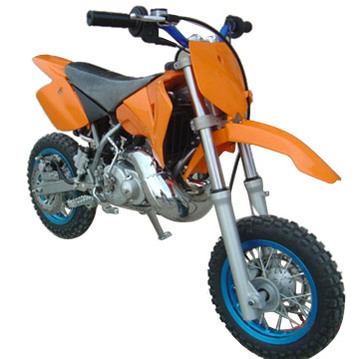
There are so many different types of engines out there that it’s a challenge to remember how each one operates. So next time you’re filling your water-cooled engine up with Evinrude xd50 oil you may want to consider that because engines create so much heat during the combustion process they need to be cooled often. Water is much better at conducting heat than air. Water-cooled engines can often be found in motorized bikes.

Here’s how a water-cooled engine works: A water-tight jacket fits around the head and cylinder of the engine to carry heat away from the heart of the engine. The water is then circulated through the tubes in a loop from the cylinder to a radiator, where the water is cooled by air. The water then returns to the engine to pick up some more heat.

Did you like this? Share it:

Don’t Forget To Check Your Oil

evinrude oilWhen purchasing a new car it’s important to know about car maintenance. Understanding the basics of car upkeep will allow your car to run longer and cost you less money in the long run. The best way to start is by understanding your car’s maintenance schedules. Recommended maintenance routines will be outlined in the car owner’s manual.

One of the most important parts of car maintenance is making sure your oil is at a decent level. You can do this by manually checking the oil level. You’ll need to open up your car’s hood and find the dip stick. After you’ve located the dip stick, pull it out and use a clean cloth to wipe it off. Next, dip the stick back in the tank; upon pulling it out you should be able to see whether or not you need to add oil. If your oil is low use a high-quality product, like evinrude oil, to fill it to capacity.

Did you like this? Share it:

TCW-2 Oil and Older Outboard Motors

TCW-2 Oil and Older Outboard Motors

Owner’s manuals for outboard motors made in 1992 or prior used to state that premium fuel was required for proper operation, because during that time, premium outboard motor fuel was manufactured containing additives that minimized the formation of deposits inside the engines. During those years, the best oil available was rated at TCW-2 and did not contain the detergents and carbon preservative ingredients that marine engine oil such as XD-30, XD-50, and XD-100 does today. The federal government ruled in the late 1990s that all grades of fuel were required to include identical additive ingredients, and the premium fuel requirement for outboard motors was discontinued.

If you still have some TC2-W outboard motor oil, it can still be used in a motor from 1992 or before. If you choose to use TC2-W oil in an older motor, Evinrude recommends addition of a product such as Carbon Guard to lessen carbon deposit formation. Be aware, however, that using TCW-2 oil in a motor that requires TCW-3 oil will void your warranty should any oil-related malfunction occur.

Did you like this? Share it:

Got Evinrude Oil?

Got Evinrude Oil?

If it is a new motor, and it is attached to a new Evinrude boat (or a new-to-you boat), congratulations! You may have a question or two about the best care and feeding for this fine machine. For instance, if you are dealing with a two-stroke Evinrude motor, you may be wondering what kind of oil to use. Their suggestions are XD30, XD50 and XD100 oil for two-stroke motors that are 1993 and newer. When it comes to the grade of Evinrude outboard oil to use, 87 octane is the current minimum, but 89 octane is actually preferred. Use of higher-octane fuels have not proven to provide any additional benefit, and may actually exacerbate hard starting conditions in hot weather.

If you are wondering about the proper ratio of fuel to oil for optimal performance in your Evinrude motor, a breakdown given on the company website is as follows: 1958 and prior used 20 parts fuel to 1 part oil; 1959-1963 used 24 parts fuel to 1 part oil; 1964 and newer use 50 parts fuel to 1 part oil. High performance racing usage requires a ratio of 25 parts fuel to 1 part oil. Finally, when it comes to gearcase oil type and capacity, refer to your owner’s manual for specifications.

Did you like this? Share it:

History of Outboard Motors

History of Outboard MotorsThe creation of the first practical outboard motor is often credited to Norwegian-American inventor Ole Evinrude in 1909.

Historically, a majority of outboards have been two-stroke powerheads fitted with a carburetor due to the designs inherent simplicity, reliability, low cost and light weight.

In the 1990s, U.S. and European exhaust emissions regulations led to the proliferation of four-stroke outboards. Though fewer in number, four-stroke outboards have always been with us.

Outboard motors benefit from the ability to draw coolant from the water, obviating the need for radiators and cooling fans, thereby simplifying the design and lowering component weight. The motors also have several brands (i.e. Yamalube, Mercury and the creator’s namesake, Evinrude) of oil to choose from, giving the consumer a seemingly infinite amount of options based on their needs.

Did you like this? Share it: