




Preventive Care for Outboard Motors
 For most fishermen and fans of recreational water sports, a boat represents one of the most serious investments in one’s life. It generally comes down to a house, a car, and then a boat – in that order. So, assuming your boat is the third biggest financial investment in your life, doesn’t it deserve the sort of time and energy you put into your other prized possessions? After all, your home might be remodeled, repainted or at least cleaned each spring. And you wouldn’t think of driving your car much more than 3,000 miles without an oil change, would you?
While there aren’t universal rules about adding bulk outboard motor oil to the boat engine, it’s up to you to consult your owner’s manual for guidelines. When boating season begins, it’s best to take your winterized boat to a professional mechanic. After that, you should be able to handle post-trip routine maintenance. It’s important to always flush out the engine – whether you’re boating in salt water or fresh.
The only tools necessary for this task are a garden hose and a set of rabbit ears, or seals that slip into the lower unit of the engine. Take this opportunity to check the stream of water as it flows out of the pump. If it’s hot, there could be some debris jammed inside. This will end up taxing the engine too much, so it’s best to shut things down and root around inside the tubing for the source of blockage. After that, disconnect the fuel line and burn all the fuel in the carburetor.
 Now that winter is on the way and likely to stay in parts of America for the next several months, many boaters enter a planning stage. Since they cannot get out on the lake to go fishing or just to cruise around aimlessly, a number of thoughts begin to enter their heads. Foremost among these is the question of whether to buy a new boat. Every spring like clockwork, thousands of people show up at marinas and dealerships ready to make such a purchase.
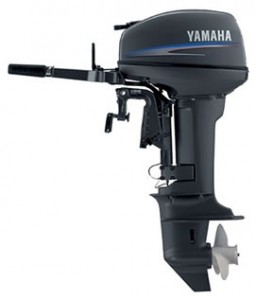 Since their introduction in the early 1900s, outboard motors have revolutionized the way in which we think about boating. Prior to that, boaters and fishermen were largely dependent on the direction of wind or – for those who felt like using oars – brute force. Outboards have taken the focus of our attentions of locomotion, allowing us to think about catching fish or just enjoy the scenery.
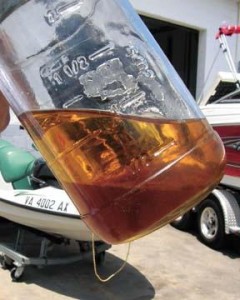 As many boaters know, the Environmental Protection Agency has been cracking down of production of inefficient vehicles in recent years – whether they are designed to drive along roads or motor through a waterway. In some respects, the influx of restrictions and guidelines has been a good thing. After all, most boaters want to make as little lasting environmental impact as possible as they go about their hobby.
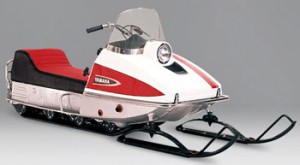 The first snowmobile-esque vehicle to be manufactured was intended for military and police transportation. In the mid to late ’50s, Bombardier created a rudimentary snow track machine capable of holding up to a dozen people. Needless to say, this machine bore little resemblance to the sleek, sporty recreational sleds of today. Bombardier released a more compact snowmobile in 1959; for the first time, such a machine was meant for public use.
 As much as we might hate to admit it, most anglers are faced with an offseason that lasts at least several months. When spring comes around, we can start our love affair with the fishing boat all over again. Until then, it’s up to us to winterize and find other ways to pass the time – such as snowmobiling. But before you hop on that sled, let’s take some time to ensure that you’ve done all you can to winterize the boat effectively.
 Today we conclude our week-long look at snowmobiles. It all began Monday with an exploration of a typical sled’s drive system. From there, we compared and contrasted snowmobile tracks with those of a tank. Yesterday we posted some brief thoughts on the environmental impact of snowmobiling and the importance of replenishing
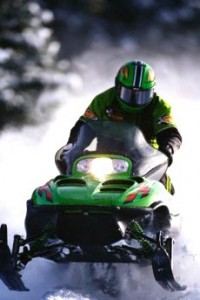 In the past few days our discussion of snowmobiles has run the gamut from power systems to track mechanics and steering. Today, it’s time to take a step back from the nuts and bolts to see the forest for the trees. Just what are the environmental implications of recreational sleds, and what plans are in the works to increase engine efficiency? Unlike the environmental effects of automobiles and boats, those of snowmobiles remain understudied and to some extent uncertain.
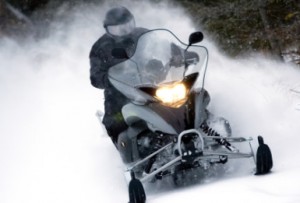 In yesterday’s installment, we took a look at the four main components of a snowmobile’s drive system: the engine, clutch, track and skis. We’ll shift gears slightly today to focus on the track in particular and the steering system in general. The track is designed to maximize traction as the sled moves along the snow. It could be likened to that of a tank, with one major difference: tank tracks are stiff and durable above all other considerations because of the role they play in warfare. Snowmobile tracks, on the other hand, are meant for optimal swiftness and maneuverability.
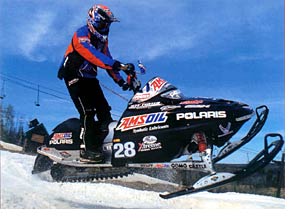 Last week we presented a four-part series on seasonal snowmobile maintenance – the kind of repair work that should be done even before the best powder begins to fall. This week, we’ll take it back to basics, explaining the ins and outs of the snowmobile from its drive system to its steering system, from environmental impact to safety tips. For those of you who already go snowmobiling on a regular basis in winter, this should prove a valuable refresher. For beginners, it aims to serve as a good informational starting point.
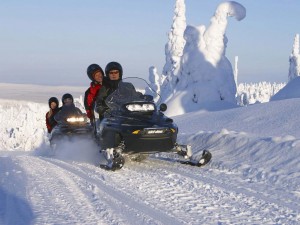 Over the last few days, we’ve discussed the ins and outs of a seasonal snowmobile tune-up – from salvaging the upholstery to checking for exterior scratches and ensuring proper fluid levels. In today’s final installment, we’ll shift over to one of the most common causes of engine failure: the filthy carburetor. It doesn’t take much more than regular hand tools, a can of carb cleaner, some ingenuity and a willingness to get your hands dirty.
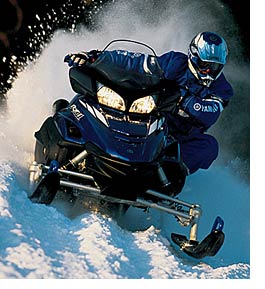 We continue today with part three in an ongoing series dealing with snowmobile maintenance. With winter temperatures already established across many areas of the country, those powdery drifts of snow likely aren’t far behind. In order to keep your sled running with reliability and efficiency all season long, it’s best to perform a scrupulous preseason tune-up. Let’s go under the hood to check the integral inner workings of the sled.