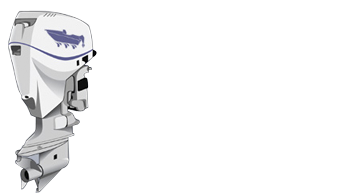

Yamaha Separating Filter

Every Yamaha motor needs a 10-micron fuel and water separating filter. Because the filter is so essential, it needs to be checked for signs of wear and tear every three to six months. This month formula corresponds to approximately 50 to 100 hours of outboard use.

The filter is not only important during the summer months; it is also an important piece of the winterization process. Without a functioning separating filter the outboard can suffer damage when not in use. Next time you replace your Yamaha 2M oil, remember to take a peek at the separating filter, too.

Did you like this? Share it:

Lawn Maintenance

One of the chores I was responsible for growing up was taking care of the lawn. Each week I was responsible for mowing the front and back yards. Sometimes I’d take care of the neighbor’s lawns too if the neighbor was unwell or out of town.

By the sidewalk, along the garden beds, and down by the street curb, I had to use a weed whacker. It is from maintaining the weed whacker that I learned about two stroke engines and two cycle oil. That knowledge came in handy when I moved up to working on two stroke outboard motor boat engines.

Did you like this? Share it:

History of the Snowmobile

In 1910 Russian inventor Igor Sikorsky invented the precursor to the modern snowmobile, known as the Aerosan. Six years later, Ray H. Muscott invented the first U.S. snowmobile that used rear tracks and front skis. Canadian Joseph-Armand Bombardier produced the seven-passenger snowmobile in 1937. During World War II he introduced the B-12, which, not surprisingly, could hold 12 passengers.

Polaris Industries, created by Edgar and Allen Hetteen and David Johnson, produced the first personal snowmobiles in 1956. The modern snowmobile, known as Ski-doo, was manufactured by Bombardier in 1959. By the 1970s the sport had really taken off and there were more than 100 snowmobile manufacturers. I learned all this while researching the best snowmobile oil.

Did you like this? Share it:

Why Use Ringfree Plus?

Over time, carbon deposits can build up in your outboard motor, leading to serious performance issues. Though some build up is to be expected, you can avoid performance issues by using Yamalube Ringfree Plus. The additive has proven effective at cleaning combustion deposits, particularly around the piston-ring area.

Not only does the piston-ring area benefit from a good cleaning, so do the carburetors and fuel injection systems. Yamalube Ringfree Plus additionally protects against sulfur compounds found in ethanol blended fuels. Be sure to stock up on this impressive boat engine oil.

Did you like this? Share it:

Family PWC Models

Did you know that among personal watercrafts, multi-person models sell the best? Even though they are the slowest and least fuel efficient, one, two, three and even four person PWCs sell extremely well. That is because these models have been touted as family-friendly.

When my kids were younger we owned a multi-person PWC. It was great to strap everybody into life vests and take a spin on the water. Once my kids got older, I ditched the multi-person for a single sit-down ride. I’ve saved a lot of money on fuel and Yamalube oil by making the switch.

Did you like this? Share it:

Stand-Up and Sit-Down PWC

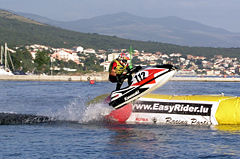
There are two main types of personal watercrafts: stand-up and sit-down models. Stand-up models tend to be small, single person watercrafts. They also tend to be used for aerial tricks, but can pose problems to professional riders who prefer sit down controls. Overall, stand-up models tend to be cheaper than sit-down models.

Sit-down personal watercrafts gained popularity in the 1980s when the U.S. developed an interest in family-friendly water sports. Sit-down models can seat one to two passengers depending on the model. They are less efficient when it comes to fuel consumption, but they are easier to steer than stand-up models. Yamalube 2W oil can be used for both models to keep the gears operating smoothly.

Did you like this? Share it:

Being Safe on PWC

My wife was nervous the first time my kids expressed an interest in personal watercraft. We know some kids who have seriously injured themselves going too fast on the water and losing control. Others have hurt themselves attempting stupid tricks.

We did finally consent to letting the kids’ use our PWC, but they had to prove they were responsible first. They had to demonstrate their knowledge of the machine and its maintenance, including demonstrating how to replace the Yamalube 2W oil. They also had to take a safety course at the marina and pass with a 100 percent. Finally, they had to sign contracts with me and their mother stating that any violations of our rules would result in a lifetime ban from using the PWC. No warnings, no strikes, one mistake and they’re cut off. Thus far my kids have obeyed the rules and stayed safe.

Did you like this? Share it:

Benefits of Bulk

I have owned several outboard motor boats over the years. Some years I’ve had overlaps where I suddenly had three boats instead of the usual two on my property. To keep all of them in tip top shape I use Yamalube 2M oil.

After a couple years of buying Yamalube individually, I finally sat down and crunched some numbers. It worked out that buying Yamalube oil in bulk was the better way to go. I saved money and time, plus I rarely have to worry about running out of oil.

Did you like this? Share it:

Good Weather & Good Food

This weekend we had unseasonably warm weather. With a little urging from my wife and kids, I got the boat ready with some Yamalube 2M oil, trailered it and headed out to the lake for an afternoon of fun. While my wife and kids took the boat for a spin, I stayed on shore and rustled up some food.

I set up my charcoal grill, got a nice burn going, and went about making my famous hamburgers. I loathe frozen patties and refuse to eat them. My burgers are made with fresh ground beef, chopped onions, eggs, and spices. I shape the patties and then char them to perfection before serving them on a sesame bun. Good weather deserves good food!

Did you like this? Share it:

Outboard Motors

Owning a boat can be quite costly. Maintenance supplies and licenses can be a bit much for someone who doesn’t spend a lot of time on the water. If, on the other hand, you’re essentially a fish without gills, then you should invest in the best boat maintenance supplies available.

Best is not automatically synonymous with most expensive. For example, I keep my Yamaha outboard motor well lubricated with Yamalube 2-M oil. It’s not the most expensive stuff on the market, but it is the most effective. Trust me; I’ve tried all the oil brands and I only trust Yamalube to keep my outboard humming along.

Did you like this? Share it:

Yamalube Types

The Yamaha Motor Corp. produces a line of regular and synthetic oils under the Yamalube label. In recent years, the Yamalube 2 cycle oil types available include 2R, 2W, 2S and 2M. The Yamalube 2R oil is intended for use with motocross engines, while the 2W is intended for WaveRunners and other sporting boats.

ATVs, golf carts, snowmobiles, and motorcycles can all benefit from the use of Yamalube 2S oil. Yamalube 2M is particularly useful for two-stroke outboard boat motors. If you do not have a two-stroke engine, then I would still advise looking into other Yamaha engine oil for your needs as the brand is incredibly trustworthy.

Did you like this? Share it:

Trusty Yamalube 2 Cycle Oil

After slogging through a dreary winter, I cannot wait for spring to arrive so I can get out on the water. Over the years I’ve acquired a number of toys: speed boats, WaveRunners, wake boarding accessories and more. When it comes to keeping my toys in good working order, I turn to Yamaha products.

Yamalube oil has served me well over the years. I use it in conjunction with my personal watercrafts and it has never given me anything other than smooth sailing, so to speak. Once I tried a cheaper brand, but, as the saying goes, you get what you pay for. I immediately drained the cheap stuff out and went back to Yamalube.

Did you like this? Share it: