
Archive for June, 2008

Two-stroke oil (also referred to as two-cycle oil, 2 cycle oil, 2T oil or 2-stroke oil) is an engine oil intended for use in two-stroke engines, like those in many lawnmowers, Outboard motors, mopeds, scooters and small capacity motorcycles, etc. Since these lightweight engines do not feature oil sumps to collect and recycle oil like 4 cycle engines, oil must be mixed with the petrol fuel, for distribution throughout the engine for the purpose of lubrication. The two-stroke oil is ultimately burned along with the fuel resulting in exhaust emissions such as blue smoke and a distinctive odor.

If you’re a loyal Evinrude oil user then you’ll want to pay attention to this post: come July 1st, Evinrude will be slightly increasing their prices by 10%. Now while the number itself may seem a little steep, you have to think that for the overall performance by Evinrude will be worth the price increase.
This change is wide and not localized to any singular retailer, so if you use Evinrude and you plan on taking your boat out soon, you may want to purchase some oil now, while it retails for a lower price.
Part of making your boat run well is to regularly change your oil filter. Ideally, you’ll want to change your outboard oil filter every 100 hours, or at the top of the season. Here’s a guide on how to do it yourself:
• Because you’ll have to drain and then refill the oil, you’ll need to pull the boat out of the water onto dry land.
• Remove the engine cover, which is usually held in place with the use of one or two latches. Simply pull down on it and lift it straight up. Let it set off to the side — being careful not to scratch its surface.
• Here are some key parts and elements on the engine:
• Dip Stick — Simply pull it out to examine the condition of the oil inside the crank case.
• Fill — The fill for the engine oil screws on and off.
• Drain Plug — The manufacturer installed the drain plug for the crank case oil in what’s called the “mid-section” of the outboard engine. You simply loosen it to drain the oil.
• Before getting into the oil change, bring in a table and turn the steering wheel so that the drain plug on the motor is facing inward. Then trim the engine all the way up and place an oil pan on the table and under the drain plug.
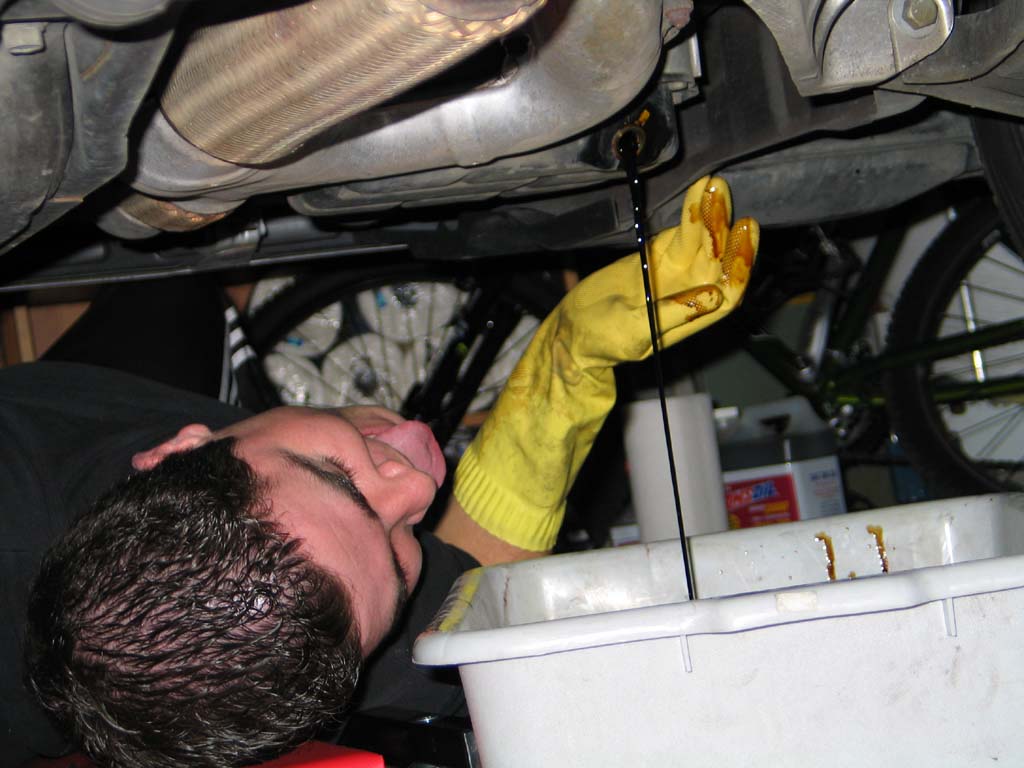
• Back the drain plug out with the socket wrench, and be sure to have the oil pan right under the plug because the oil will flow freely.
• Once all of the oil has drained, wipe up any excess oil with a rag or absorbent pad.
• Replace the drain plug and tighten it securely.
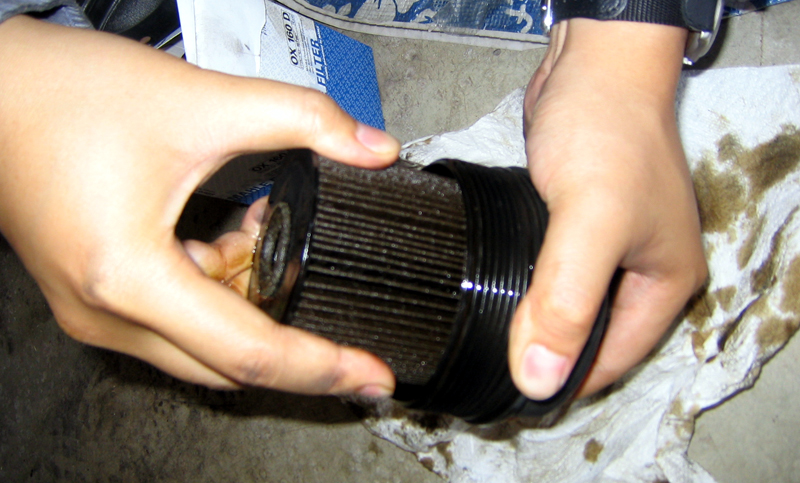
• To change the oil filter, which needs to be changed every time to change the oil, you won’t be able to use a traditional oil-filter wrench because they’re too large. What you’ll need is a strap wrench that slips right over the filter cap. Pull it tight and then try to loosen the cap. If the strap slips, you may have to clean the filter cap with an absorbent pad. If this doesn’t work, get a screwdriver and hammer and simply drive (by tapping) the screwdriver tip down into the cap, and then rotate the filter until it becomes loose enough to take off.
• Before you replace the old oil filter with the new one, dip your finger into the old oil and rub a bead of the oil around the edge of the new filter’s gasket o-ring. This will make the job of removing this filter that much easier when it’s time to replace it.
• Screw the new oil filter into position.
• Now that the oil filter is in place and the drain plug is secured tightly, it’s time to remove the plug for the fill and add the three quarts of oil using a funnel.
• Warning: Every engine is different so be sure to check with the manufacturer’s manual for how much oil to use.
• The last thing you need to complete the oil and filter change is to pull out the dip stick in order to make sure you have enough oil.
• Please always dispose of discarded engine oil at an approved collection center.

Clean Water: By recycling your used outboard motor oil, you keep it out of rivers, lakes, streams and even your ground water. In many cases, that means keeping it out of your drinking water, off our beaches and away from wildlife.
Recycling the motor oil from one oil change protects a million gallons of drinking water – or a year’s supply for 50 people.
Save Energy and a Resource: Motor oil doesn’t wear out – it just gets dirty. As it circulates through your engine it picks up a variety of contaminants and becomes dirty or used and needs to be replaced. If you are one of the millions of do-it-yourselfers who drops off your oil at a collections center or uses curbside pickup you are conserving energy for future generations.
If one gallon of used motor oil is reprocessed and burned as fuel, it will generate enough electricity to power everything in your home for a day.
Recycling Used Oil: Used motor oil can be reprocessed into fuel that warms your home in the winter and cools it in the summer. It can be burned in furnaces for heat, or in power plants to generate electricity for homes, schools and businesses. Processed motor oil can also be used in industrial burners, mixed with asphalts for paving, or blended for marine fuels.
Used motor oil can be re-refined into lubricating oils that meets the same certification and specifications as new or virgin motor oil thus conserving energy resources for the future.
Part of being a responsible boater is to ensure that your boat isn’t leaking outboard motor oil. Not only will leaks and spills be a detriment to the environment, but some states will fine you for leaving a trail of oil. Spills and leaks can be prevented by checking your motor before taking your boat out on the water. Also make sure that your motor is tuned and bilges have been checked for oil leaks.

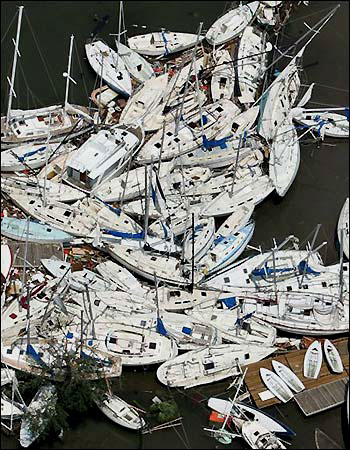
Additionally, you should also check weather reports, as overturned and submerged boats can leak fuel and oil into the water, killing fish and other wildlife.
Bulk oil once again hit a mood swing as it surged towards $140 a barrel, only to fall by day’s end. However, the average gas price has hit $4 a gallon, though some areas have been paying up to $4.45 a gallon for regular unleaded gas.
Oil also continues to decline based on the lack of consumption based on the current record break gas prices.
The summer vacation season began two weeks ago and the official start date for summer is another week away. The prime time for boating is now and if you’ve already cleaned your boat and changed your marine engine oil, you should go over a checklist of some of the safety precautions you need to know about:

Required by Law:
• Approved wearable flotation device for each person readily accessible
• Additional throwable flotation device on boats over 16 feet
• Persons 12 and under must wear a personal flotation device while underway
• Fire extinguisher if fuel tank or engine is enclosed
• Running lights after sunset or during restricted visibility
• State registration card on board
• Registration number and validation sticker displayed
• Do not operate a boat under the influence of drugs or alcohol
• Observe navigation rules
• Do not overload boat
• Sound signaling device
Other Items:
• Do not occupy ramp until boat is ready to launch
• Notify others of your schedule
• Obtain weather forecasts
• Navigation charts
• Bail bucket
• Anchor and line
• Paddle
• Secure boat to trailer after loading
• Trailer lights
• Reduce speed at night
• Check for gasoline fumes
• Motor kill switch
• 170 degree wide-angle rear view mirror
Wear Your Personal Flotation Device
• 80% of drowning victims in boating accidents were not wearing a personal flotation device.
Last week, bulk oil prices fell away from the $130 mark and ended the week at $122. Now, oil prices are rising again to $123 a barrel. This comes at the heels of the dollar weakening against the Euro, as well as beginning of hurricane season. The changing oil prices has failed to slow the prices of gas, however, as it inches closer to an average of $4 a gallon, though most states are paying beyond that now.
Analysts predict that the $4 mark will be the peak and begin to drop as the summer progresses.
You should change your marine engine oil and filter every 100 hours or every season, which ever comes first. This simple piece of maintenance is often overlooked because it is not quite as easy as changing the oil in your automobile. Following is a step-by-step process which you can follow to make the chore more bearable.
Equipment Needed:
• An oil filter wrench to fit each size of spin-on filter you have
• A box of Zip-Lock baggies large enough to hold an oil filter
• A wrench the correct size for your crankcase drain plug, and a pan shallow enough to fit under your engine if possible or,
• A dipstick-tube oil drain pump and bucket big enough to hold all the oil or,
• An oil drain pump permanently fitted to your crankcase drain plug and bucket
• A roll of paper towels
• New oil filter(s)
• A supply of fresh oil as recommended by your engine manufacturer
Step-by-Step:
• Run the engine(s) until warmed to at least 130 degrees
• Drain the oil using the pump, or into the pan
• Replace the plug or close the valve
• Loosen the oil filter on the engine until it can be turned by hand
• Put a Zip Lock Baggie around the filter, and unscrew the rest of the way
• Use a paper towel to catch drips from the filter’s mounting
• Seal the zip lock baggie keeping the filter upright
• Put it into the new filter’s box
• Using your finger, wet the O-ring atop the new filter with fresh, clean oil
• Screw on the new filter until just finger-tip tight
• Follow the manufacturer’s recommendation as to tightening with the wrench
• Re-fill the crankcase with new oil (see your engine handbook)
• Be sure to add a quart for the filter
• Wipe up any drips
• Start the engine and let it run a few minutes
• Checking to be sure oil pressure comes up and there are no oil leaks around the filter or drain plugs
• Dispose of the oil properly at an approved disposal facility
Depending on your engine type, how fast it could potentially go and how quickly it will burn through oil, you have several brands to choose from. Some people align their engine brand with the oil (such as using Yamalube oil for Yamaha engines), and others shop around. When I bought my boat, I posted on a message board to find out what people recommended and that worked out pretty well since I was able to go with a brand, though not corporately related to my engine, my engine runs of a premium rate.