
Archive for the ‘bulk oil’ Category

A boat’s drive system consists of components that work together to transfer engine power to the water, directing the thrust of the vessel. A problem with the drive system can spell disaster for a boat’s mobility and bring what should have been a peaceful day out on the lake to a screeching halt. Today we’ll take a closer look at the three main types of drive systems as well as their individual strengths and weaknesses.
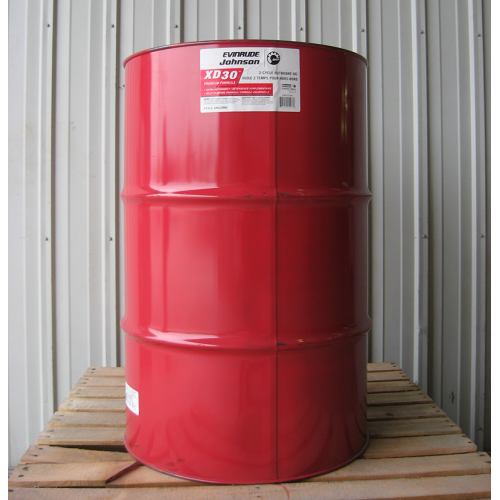
Drive systems are identified by their positioning in the boat. The three types include inboard, outboard and inboard/outboard. Among the three, outboard motors are highly touted for their portability and the fact that they don’t take up any interior space. It’s crucial that the weight of an outboard is chosen according to the size of a boat, as a heavy motor can cause the craft to sit low in the water. Before taking an extended trip with this type of engine, it’s crucial to pack a supply of bulk outboard motor oil.
Inboard engines often get credit for providing more stability as they can be balanced inside the boat near the center of the hull. Unfortunately, these engines are less than ideal when families or large groups of friends want to take a ride; they simply take up so much interior room. An inboard/outboard system solves the space problem by keeping most of its components outside the boat, but the engine itself is more complex and prone to breakdowns.
Over the last few months, we’ve visited and revisited the threat posed by ethanol additives to the small boat industry. Specifically, ethanol lobbyists are seeking a waiver to sell E15 – that’s gas with a 15 percent concentration of ethanol – or even E20 as a standard fuel mixture for marine engines. As many boaters are aware, most small vessels on the market and in the water today are ill-equipped to deal with such high concentrations of the additive.
The question, then, for most boaters is “how much is too much?” The answer depends on the make, model and year of each individual boat. While most outboards are made to handle standard two cycle oil made by the likes of Yamaha, Evinrude and Mercury, marine engines can generally tolerate E10. The fuel system of the boat is a whole other story, as even a 10 percent concentration of ethanol can do irreparable damage.
E10 has a shelf life of two weeks, after which time it undergoes phase separation. If a boat sits idle for any extended stretch of time, the ethanol additive will evaporate, leaving behind only low-octane fuel. This fuel is much more likely to create blockages in the fuel system, and the ethanol that separates will sink to the bottom of the tank. After phase separation occurs, the fuel system is rendered inoperable until it’s drained.
With technology advancing by leaps and bounds in recent years, allowing anglers to pinpoint their location, route, and the best places to find fish, it should come as no surprise that reliable batteries and charging systems are a top priority. Many boaters rely on GPS, fish finder technology and VHF radios for communication; none of this would be possible without the juice required to power the whole enterprise.
While the above features could be classified as luxuries, there are several functional parts of the boat that also need battery power – namely electronic fuel injection systems. As such, Yamaha recommends that boaters bring two battery systems onboard. One should be used as the main power source for starting the engine, and the other should be dedicated to the specialized electrical devices.
By limiting yourself to a single battery system, you run the risk of sapping it part-way through your trip. Just as you should always bring bulk motor oil along for lengthy voyages, you should also be prepared in case of battery problems. Bring a backup or two, and you can work on installing it into the system as needed. Bear in mind that deep-cycle batteries are suited for energizing the electrical system as they are more dependable over an extended period of time than cranking batteries.

Over the years, 2 stroke engine manufacturers competed not only to build the most powerful engines, but also the most efficient ones. Efficiency becomes even more crucial when discussing engines in the 115 to 150 hp range. These outboards are best suited for boat owners who don’t mess around – they want to get from point A to point B quickly, and reliability is key. Still, it would be a shame to waste a perfectly good fuel/oil mixture.
Loop charging, also known as Schneurle porting, is a method by which transfer ports force the fresh fuel/air mixture into the combustion chamber as soon as it enters the cylinder. This discourages fuel from being lost through the exhaust port, improving efficiency as well as engine power. The method got its moniker from Anton Schneurle, a German scientist who invented a form of it in the 1920s.
Prior to the widespread of loop charging, 2 stroke engines trailed behind their 4 stroke counterparts in terms of power and efficiency. Today, Yamaha and other purveyors of 2 cycle oil feature a line of high-end, loop-charged engines that run the gamut from 115 hp to 150 hp. Without these innovations, boat owners wouldn’t be able to enjoy the speed and efficiency of modern outboard engines.

You’ve done everything right so far. When it came time to winterize your boat, you followed every solid piece of advice, from flushing the outboard engine with fresh water to disconnecting the fuel hose and changing the gear oil. Unfortunately, there’s one minor detail you may have overlooked, and it’s a doozie. It’s just as important to care for your engine and its components during the offseason as it is during the height of summer.
While your boat is still being used regularly, you’re always diligent about replenishing the supply of bulk oil, so don’t skimp on the essentials during winter. You’ll need to implement a fuel additive – a stabilizer specifically – to ensure that the fuel system doesn’t corrode from disuse. During the summer, most of the varnish and other assorted buildup in the fuel system is flushed out as the engine is in regular use.
These additives keep the system well lubricated so that rust and corrosion don’t build up on the bare metal parts in the fuel system. Since it’s nearly impossible as well as unadvisable to drain all of the water out of your fuel system, additives keep excess water at bay, preventing varnish and sludge from depositing inside the injectors, carburetors and other vital parts of the engine.

Yesterday’s discussion of TC-W3 brought a few terms to the fore that might have been unfamiliar to novice boaters. Seeing as how it’s so important to understand every facet of your outboard motor in order to get the most out of it, it’s time to define some terms. Some people have a tendency to confuse lubricity with viscosity when in fact they are two entirely different principles.
When considered in a bulk outboard motor oil context, viscosity refers to the thickness of the fluid. Oil must be viscous enough to stand up to the intense heat created during the combustion process; otherwise it will fail to coat the hot engine adequately. On the other hand, if the oil is too viscous it can create blockages in the fuel system and make the boat ineffective for cold starts.
Lubricity is a bit tougher to define, but it’s equally important in terms of maximizing outboard motor performance. To put it in a rudimentary way, lubricity measures an oil’s capacity to lubricate against wear and tear. In the course of its normal operation, an engine generates plenty of friction. This combination of intense heat and pressure can be detrimental to a motor that isn’t properly lubricated.
The lower-horsepower outboards highlighted yesterday are perfectly suitable for inflatables, canoes and other small craft, but what about those who want to step up their performance? Mid-range engines are tailor-made for fishermen and other boaters who appreciate the capability of traveling several miles at a time. Outboard motors in the 20 to 35 hp range fit the bill, providing crucial mobility for light fiberglass vessels and sailboats.
In general, you should select your ideal horsepower based on a boat’s weight and a boat owner’s desired level of mobility. It might take a 90 hp engine just to get a large pontoon or deck boat to plane. A sailboat won’t require a motor this large, however. Larger engines that generate excess horsepower can actually weigh down and impede the progress of a small boat.
Once you’ve selected an outboard motor with the proper size and power, it’s important to keep the engine well-tuned. By purchasing bulk motor oil, you can ensure that you’ll always have easy access to lubricant when it’s time to perform engine maintenance. This in turn will extend the life of your motor and allow you to enjoy many more summers out on the lake.
WaveRunners and other personal water craft promise hours of enjoyment on the open water – whether you’re taking a weekend trip to the lake or visiting friends at their seaside getaway. Just like all waterborne vessels, WaveRunners should be operated in a safe, responsible manner. As long as you keep a few basic safety tips in mind, you’re virtually guaranteed a carefree marine experience.
First and foremost, wear a life preserver. People who forgo life jackets out of pride are only doing themselves a disservice. Most states mandate life preservers, and the choice is a no-brainer anyway. Keep your vision from becoming obscured by donning a pair of goggles. You may also prefer to wear gloves, thereby ensuring a solid grip on your craft’s movements.
When other watercraft or swimmers are nearby, you should maintain at least 100 feet of distance. The worst WaveRunner accidents are undoubtedly head-on collisions.
Be sure to keep your personal water craft topped off with oil – that way the engine won’t overheat while you’re out tearing up the waves. High-quality 2-cycle bulk oil can keep your engine running smoothly all summer long.
As is the case with any machinery, outboard motors require occasional basic maintenance to run properly. Rather than waiting for something to go irreparably wrong, take a proactive approach to motor maintenance by making simple engine observations. Get to know the sound of your well-oiled outboard motor, and learn to recognize any deviations from that norm.
A functioning water pump is particularly important, as it draws water out of the engine and acts as a cooling agent. Without a water pump most 2-cycle engines would overheat in no time. To replace an ailing water pump, begin by removing the bolts from the bottom portion of the motor. Use an engine vice to securely mount the lower engine housing, making sure that any electrical wiring between the housings is disconnected.
Remove the water pump housing, and then replace the impeller. Beneath the impeller you’ll find three gasket seals; remove them. Use some of your supply of bulk outboard motor oil to lube the gaskets before slipping them back into place. Put the housing back into place, and then reconnect the wiring. You’ve just increased the lifespan of your outboard motor.
Yesterday, we took a look at a wide range of outboard motors and provided tips on how to select the proper amount of horsepower for your boat. Once this process is complete, many DIY-type boat owners will want to perform the installation. Before installing the motor and leaving for your first test run, make sure you’re stocked up on bulk motor oil.
Double-check with your boat manufacturer to be sure that you have the right size of outboard motor. Don’t forget to factor in your towing needs: Will you be tubing or water skiing anytime soon? If so, you’ll require some extra horsepower.
Next, choose motor accessories to match the specifications of your boat. If you have cable steering or hydraulic lift, the burden of motor installation is much lighter to bear. Begin the physical part of the installation by measuring your craft’s transom (basically the height of the stern). Fit the motor so that the propeller reaches below the water line, but not low enough to cause drag.
Once the motor is positioned correctly, affix it to the top of the transom by tightening the clamps. Finally, attach a safety cable to the motor. This will keep your motor from sinking if it’s detached by a submerged rock or other debris. Now you’re ready to take your boat out on the open water and enjoy the warm summer breeze.