Archive for the ‘Outboard Motor Oil Recycling’ Category

The EPA has mandated that the use of increased renewable resources must be used in motor oils. Throughout the U.S., ethanol is the most widely available renewable fuel that can be added to conventional gasoline without significant changes. But unfortunately, in a marine environment, ethanol-blended fuels can cause potential damage to outboard engines. Throughout the marine industry, many companies are working towards ways to mitigate the negative effects of ethanol-blended fuel. The EPA wants to increase the ethanol blend wall in gasoline from 10% to 15%, but most older outboard motors cannot function with a ratio higher than 10%. Building compatible outboards for fuel containing 15% ethanol is possible, but there are a lot of older outboards that won’t be able to accommodate the new fuel blend without ill effects. The EPA hasn’t put a formal law in place that would require an E15 fuel blend, but it seems to be on the horizon.
One possible solution is for companies to create outboard oil that would counter the effects of using an E15 fuel on older engines. This outboard oil could prevent damage caused to the engine, and allow older boat engines to continue functioning.

Happy Earth Day everybody! In light of this eco-conscious day, it’s a good time to assess our own lives and determine what kind of a footprint and impact we’re leaving on our Earth. After all, if we want this planet to still be beautiful for our children, we all need to make changes in our everyday lives. These changes don’t have to extreme, though. They can be something as small as taking shorter showers or walking to the grocery store rather than driving. All of these small changes add up to a big difference.
Another imperative step in the green movement is education. After all, many people simply aren’t aware of how much damage they are inflicting with everyday activities. So make sure you know how to avoid environmental damage whenever possible. This includes when you’re filling or changing your marine engine oil. Learn the proper techniques and steps for changing the oil, and perform regular maintenance checks on your boat or marine vehicle. This will help ensure no excess oil is lost in the water where it can harm animals or water vegetation.

When it comes to motor oil, there are hundreds of eco-friendly synthetic oils that work just as well as conventional mineral oil. In fact, one company, called Green Earth Technologies, makes synthetic motor oil called G-Oil, which is derived from saturated cow fat. This oil is superior when compared to all conventional mineral oils because it possesses increased lubricity and also is better for the environment. There are several other synthetic oils developed by various companies that serve the same purpose as mineral oils.
For example, the Evinrude XD100 oil, manufactured by Evinrude, is the top synthetic oil for outboard motors and marine engines. This oil trumps conventional mineral oil in all respects, containing the same additives for marine use and providing the additional benefits of synthetic oil. While most automobiles and vehicles are still dependent on gasoline, converting to synthetic motor oil for the engine is of great help to the environment.

Let’s face it, when it comes to lures, almost all bass fishermen have a different opinion on what works best. But amongst several bass fishermen, the buzz frog is regarded as one of the best lures for a multitude of circumstances. Buzz frogs are imitation frogs with a solid body and a pair of extending rear legs. Bass just can’t resist the temptation of a buzz frog that creates a lot of noise and commotion in the water with its swimming legs. The bass have an instinct to strike the moving frog, and it’s appealing to that natural instinct that makes this lure one of the best. Buzz frogs are also excellent lures regardless of the weather conditions; whether it’s sunny, overcast, or a downpour, bass love to strike at this lure.
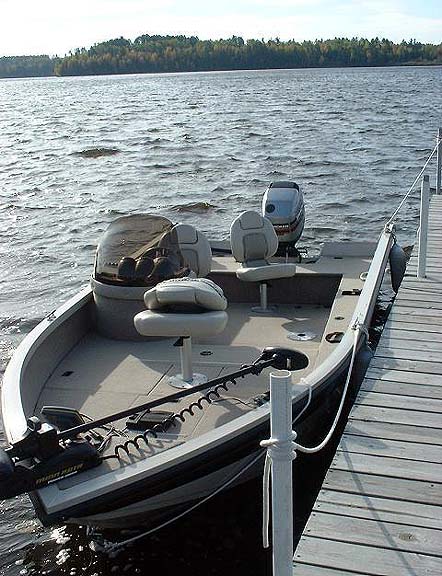
No bass fisherman would be caught without their trusty boat, and all bass fishermen know that Yamaha makes the best outboard motors for smaller craft. The professionals also recommend keeping a supply of outboard oil, gasoline, and repair tools on the boat at all times. No one wants to be caught stranded in the middle of a lake!

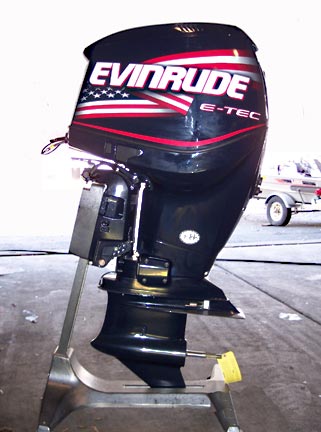
A new aluminum alloy called MSFC-398 was recently developed by a team of engineers at the Marshall Space Flight Center. Partnering with Evinrude, a leading manufacturer of outboard motors, NASA and Evinrude created the E-TEC outboard motor. The E-TEC has a simple design, but is quite effective. It’s the first outboard motor that does not require regular outboard oil changes, winterization, spring tune-ups, or scheduled maintenance.
The E-TEC two stroke outboard motor represents the latest in outboard motor technology. Because of the new NASA designed alloy, the E-TEC outboard motor is much more durable than its other two stroke counterparts. While four stroke engines have replaced two strokes in several capacities, because of the simple design of the two stroke engine, they’re still great for outboard motors and smaller engines.

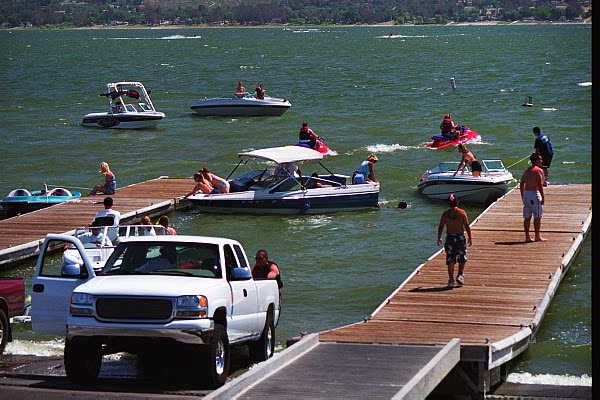
When launching your boat, whether at a conventional boat launch or in a less trafficked location without a boat launch, there are a few precautions to take before you start boating. First you will want to check the boat motor oil and fuel levels to ensure you have enough of both. Second you will want to inspect your propeller whether you use an outboard motor or an internal. In case you have boated recently, also check the hull of your boat for invasive plant species, this is pertinent for lakes and contained bodies of water.
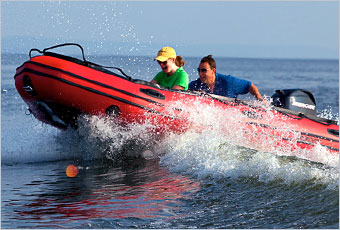
After you have launched your boat, a few handy items to have for boating include a boat hook, a rope to tie off at docks, and a small dingy or inflatable craft should there be an emergency.
Fuel prices are constantly fluctuating between high and really high these days, so it’s important to make sure you’re getting the best deal you can. Here are some fuel-saving tips when it comes to boating, according to Yamaha-motor.com:
• Perform basic maintenance, such as changing the spark plugs and outboard oil.
• Choose the most efficient propeller for your boat, and make sure there are no nicks or scratches in it. These flaws can cause a loss of grip and will reduce efficiency.
• Don’t carry extra weight if it’s unnecessary – it uses more fuel.
• Avoid wind and waves. Traveling over smooth water uses less fuel.
• Keep the boat clean. Anything stuck to the bottom of the boat increases friction.
• Switch to a four-stroke motor – they’re more fuel efficient than two-strokes.

If all the used oil from people in the United States alone who changed their own oil were re-used and recycled, there would be enough motor oil from that population alone to power 50 million automobiles each year. The used oil from just one oil change can contaminate 1 million gallons of fresh water-a year’s supply of drinking water for fifty people.
During normal use of marine engine oil, impurities such as dirt, toxic chemicals, and heavy metal scrapings can mix in with the oil, causing it not to perform as well as it once did. Used oil must be replaced periodically to help machines run their smoothest. Used motor oil is slow to degrade, adheres to everything from bird feathers to beach sand, and is a major contaminant in waterways and is a potential pollutant of drinking water sources. On average, 4 million people reuse motor oil for other equipment or take it to a facility with recycling capabilities. Used motor oil from automobiles, motorcycles, farm equipment, and landscaping equipment, as well as boats, can be recycled. Recycled used motor oil can be reinvented as new oil, processed into fuel oils, and serve as raw materials for the petroleum industry. One gallon of used motor oil produces the same 2.5 quarts of lubricating oil as 42 gallons of crude oil can.

With a four-stroke outboard motor, you will need to change the boat motor oil at frequent intervals. (A traditional two-stroke outboard motor doesn’t require engine oil because the oil and gasoline mix provides lubrication for the motor.) For a four-stroke outboard engine, it is generally recommended that the oil is changed once a year or every 100 hours of running time in fresh water, whichever comes sooner. For saltwater usage or if the four-stroke motor is run hard, the oil should be changed twice as often-for every 50 hours of running time and or twice a year if you are a frequent boater. A tip before you begin: have plenty of rags or absorbent pads ready to use during and after the oil change.
Pull the boat out of the water onto dry land and remove the engine cover (which usually is secured with one or two latches), setting it off to the side so that its surface does not become scratched. The top section of the outboard engine is called “the power head” and below it is the lower gearcase. Pull out the dip stick to assess the condition of the oil inside the crankcase. The drain plug is in the midsection of the outboard engine, and it will need to be loosened in order to drain the oil.
A table can be helpful to provide some leverage for the draining process. One technique is to turn the steering wheel so that the drain plug on the motor is facing inward, placing an oil pan on the table and under the drain plug to catch the existing oil. Back the drain plug out with the appropriate socket wrench, having a pan ready to catch the oil, because it will flow freely. Once all of the oil has drained, wipe up excess oil. Replace the drain plug, making sure it is secured.

The oil filter will need to be changed every time the outboard motor oil is changed. Be sure and place a couple of rags or absorbent pads under the filter cap to collect potential oil or debris. Try to loosen the cap, using the appropriate wrench. You may have to clean the filter cap with an absorbent pad; if this doesn’t work, get a screwdriver and hammer and tap the screwdriver tip down into the cap, rotating the existing oil filter until it loosens enough to be removed.
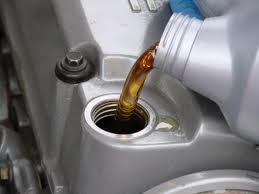
Before you replace the old oil filter with a new one, dip your finger into the old oil and rub a bead of oil around the edge of the new oil filter’s gasket o-ring, which will ease the future removal of the new filter when it needs to be replaced with the next oil change. If you will be boating in a hot climate that stays above 40 degrees Fahrenheit, use 25W-40 motor oil; in a cooler climate, use a 10W-30. Screw the new oil filter into position. Tighten the new oil filter by hand, ensuring it is snug with an additional ¾ to 1 full turn. Once the oil filter is in place and the drain plug is secured tightly, remove the plug for the fill and add the new oil using a funnel. Check your manufacturer’s manual for specifications regarding the amount of oil to use. Finally, check your dipstick to make sure there is enough oil. For environmental purposes, please dispose of discarded outboard engine oil at an approved hazardous materials collection center. Happy boating!