
Archive for the ‘Motor Oil’ Category
I’ll admit that I used to be part of the crowd that believed that synthetic and regular oil could not be mixed. I falsely believed that mixing the two would cause congealing, foaming, and leaks. All of that turned out to be false.
In fact, some major manufacturers produce blended oils known as semi-synthetics. These combination oils work because synthetic oil is based off of regular crude oil and then hydrocracked to eliminate impurities. If you already have synthetic oil outboard motor and regular motor oil on hand, then you can mix your own semi-synthetic. Just be sure to read up on proper procedures before attempting the combination.
My brothers and I grew up boating on the Chesapeake Bay. Though most of us live in urban areas now, we still go home for all the major holidays. Our dad still owns a small fleet of boats that he needs help winterizing each year.
To make it less of a chore, my brothers and I have made winterizing the boats into a competition. The first brother to finish winterizing their boat properly wins. Dad, of course, gets to be the judge. He is a particular stickler for making sure that we haven’t shortchanged any areas that need outboard oil.
The Discovery Channel has some fairly interesting reality television programming, including the series “Gold Rush” (previously known as “Gold Rush: Alaska”). I was watching one of the early episodes from season two and was simply appalled by what I saw. The crew did not winterize their big equipment at the end of last season, meaning when they arrived back at their claim, much of their heavy machinery was heavily rusted.
Naturally, there was concern as to weather the machinery would start at all. By some miracle it did, but I would never advise letting any piece of machinery simply rust away during the winter months – especially not in a climate like that of Alaska! Take this as a warning to winterize all boats now before the worst of winter sets in. Don’t forget to stock up on outboard motor oil while you’re at it.
Special marine grade oil is needed for diesel marine engines, as they typically carry high loads for extended periods of time. The National Marine Manufacturers Association tests diesel engine oils and gives recommendations based on those tests. The oils tested may be entirely synthetic or partially synthetic.
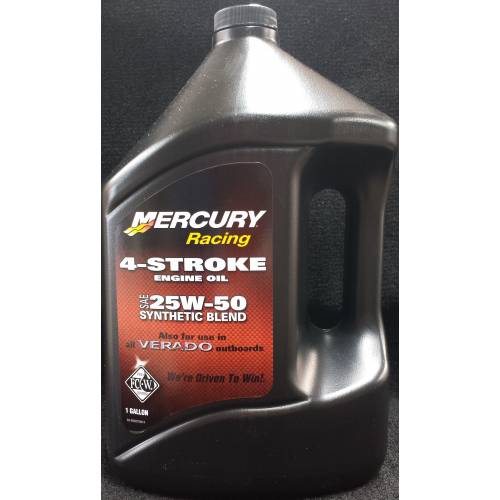
NMMA-certified oils include: oil TC-W3 amalie, FC-W and FC-W (CAT). TC-W3 is used with two-stroke engines, FC-W with four-stroke engines, and FC-W(CAT) with four-stroke engines that have exhaust treatment catalyst systems. When selecting diesel oil, be sure to consider added characteristics
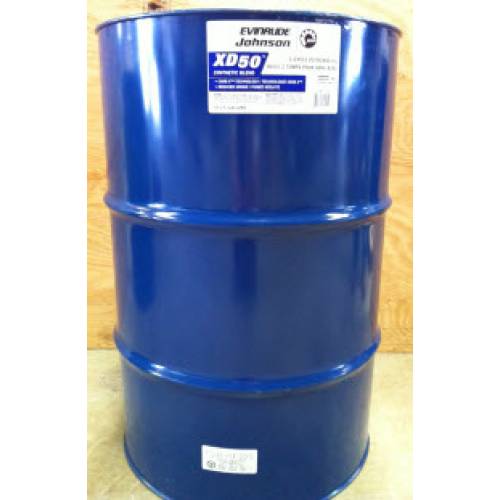
If you’re like me, then you try to save money by ordering your outboard motor oil in bulk. While this is a great money saver, you need to be careful with how you store oil. Drums can be made of several materials, including polyethylene and steel. You need to check with the manufacturer to make sure that the container you use for storage is appropriate for the oil it contains.
An incorrect storage drum can cause damage to the oil itself. The wrong storage drum can also become corroded and leak oil everywhere, thus hurting the environment and your wallet. The moral of this story is, give your mercury oil 55 gallon drum guy a call when you place your order to make sure everything is kosher.
Coming to market soon is a 15 percent blend of ethanol fuel mix. The new blend has outboard marine engine producers up in arms. An engineer from Mercury Marine Corp. was scheduled to testify before a congressional committee last week regarding the damage the new biofuel blend has on outboard engines.
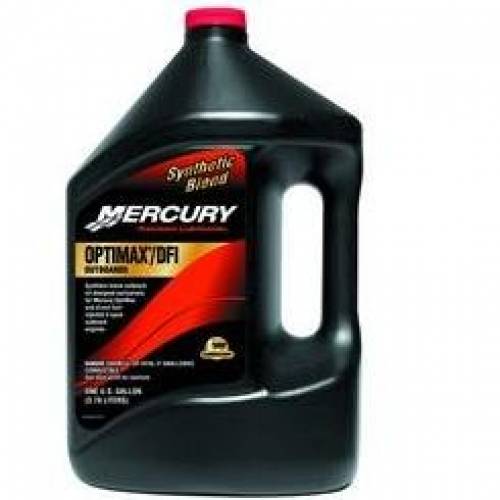
In one of the Department of Energy approved tests, a 200-horsepower outboard engine’s bearings on a piston disintegrated after 300 hours of operation. Meanwhile, the outboard engine using mercury engine oil and fuel mixture did not experience any damage. Supporters of the new blend counter that the tests are statistically irrelevant because so few engines were used. Supporters also claim that the engines tested were not calibrated properly for the new 15 percent ethanol blend.
In continuing from yesterday… Now that the carburetor is completely clean it’s time to reinstall all the parts that were removed. Start with the jets, then the fuel bowls and carburetor, and then tighten the screws. Check to make sure everything is secure and that none of the parts got dinged during cleaning.
Your carburetor should now function perfectly. Hopefully, while working on the carburetor you took a few minutes to check out other parts of your boat. Checking the level of Mercury 2 stroke premium outboard motor oil, for instance, is an important part of boat upkeep.
A flooded Johnson outboard motor is not the end of the world. With a little bit of time to allow the engine to drain, along with working the choke and idle, your outboard will be up and running in no time. Just follow these simple instructions:
First, push the choke on, turn the ignition switch, and bring the throttle to neutral. Next, push the throttle to full and open, turn the choke off, and then crank the engine. Finally, pull the throttle back to neutral, turn the ignition a few times, and let the engine drain. After you get back to land, make sure to check the motor and replace the Johnson outboard oil if necessary.
Bombardier Recreational Products purchased the Evinrude and Johnson brands in 2001. Several years later, in 2008, BRP ceased production on Johnson motors, although motors under the Evinrude brand continue to be sold. Here are some examples of the last Johnson motors:
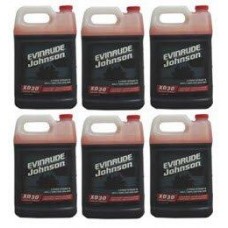
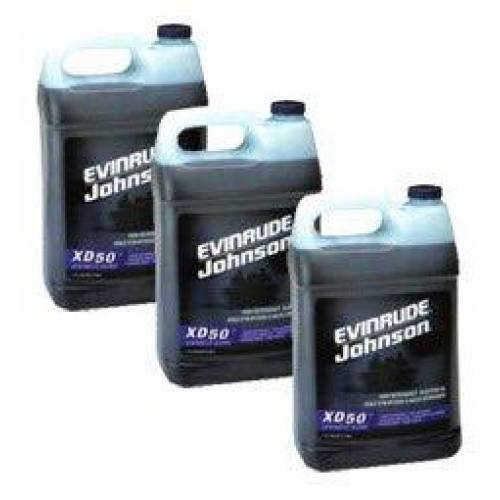
The 2008 Johnson 9.9 horsepower two-stroke outboard motor featured two cylinders with a gear ratio of 2.42:1. The motor had 5,000 RPM and a maximum WOT of 6,000 RPM. The 2008 Johnson 15.0 horsepower four-stroke motor line had several models, featuring two cylinders and a gear ratio of 1.92:1. If you still own either of those motors, be sure to pick up Evinrude Johnson 2 stroke outboard oil.
A popular marine engine for small boats is the Evinrude 9.9 hp outboard. Personally, I own a two-stroke version that operates like a dream. On occasion there may be a few hiccups, as there are with any engine, which requires some troubleshooting.
When troubleshooting, the four main areas to check are: gas tank, fuel line, carburetor, and fuel pump. You want to make sure that each of those areas is clean and without cracks. Although it is not one of the four areas, I pointed out, it can’t hurt to check the oil and replace dirty oil with Evinrude 2 cycle oil XD100, if need be.