
Archive for the ‘bulk oil’ Category
Spring has sprung which means a lot more yard work for me. Even though my wife is the one who plants all the flower beds, I somehow wind up responsible for their upkeep. Part of that upkeep involves weed whacking and edging.
To make the work a bit easier, I use a two stroke weed whacker. It’s pretty state of the art in that I can get up really close to the edges of the flower beds without risking chopping off the heads of the flowers. Plus, it doesn’t cost too much to maintain the weed whacker; all I really spend money on is some two cycle oil at the beginning of the season and some fuel when it’s needed.
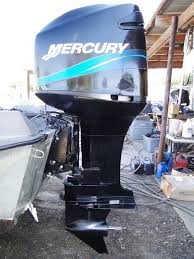
Chainsaws, trimmers, and outboard motors are likely equipped with 2 stroke engines. Unlike their 4 four stroke counter parts, 2 stroke engines do not have a crankcase. To provide proper engine lubrication, 2 stroke engines require a mix of specially formulated synthetic 2 stroke outboard oil.
Equipment manufacturers typically work with the oil industry to develop these specialty 2 stroke oils. To find out which 2 stroke oil is recommended for your motor, take a look at your owner’s manual. If you can’t find your manual, then check out the manufacturer’s website.
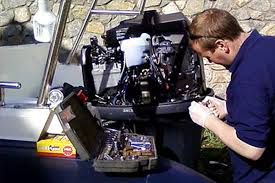
When it comes to maintaining my two-stroke outboard motor, I swear by oil TCW-3 Amalie. For a while I was attached to the Chevron brand. When I could no longer buy Chevron TCW-3 I tried out some other brands.
What I found out is that TCW-3 Amalie oil is pretty consistent across brands. Though I have some brands I favor more than others, all that I have tried have performed well. If you’re looking to try out new two-stroke oil, then I would recommend a TCW-3 Amalie because regardless of brand and price, it will get the job done.
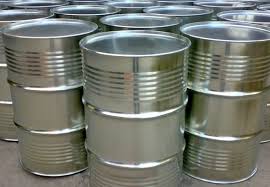
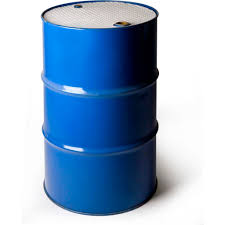
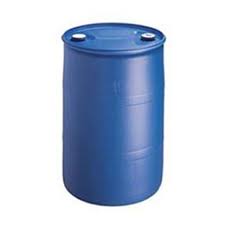
Every now and then I like to browse boat forums to see what people are talking about outside of the marina. One question that comes up frequently is how long does bulk oil last? One poster stated that he had recently bought a Mercury oil 55 gallon drum and was now worried that he might lose money on the transaction.
One person replied that oil only has a shelf life of four years. The overwhelming majority, however, replied that that was nonsense; motor boat oil does not have an expiration date. From my experience, bulk oil can last years and years, but you may have to mix it every so often to keep it from jelling.
The reason I’ve been so anxious to stock up on Mercury oil is I don’t know how much longer we’ll get to enjoy good weather. I suppose I should start by explaining that it has been exceptionally rainy. We’ve finally gotten a small reprieve, so I’m determined to take advantage of the good weather, which may not return again until late June.
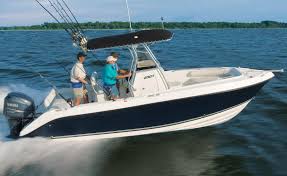
This weekend I’m hoping to take a few guests out on my boat. It’s a little cold for water sports, but taking a cruise around the lake will be a pleasant break from the norm. I’ve got my fingers crossed that Mother Nature will cooperate!
This past week I’ve been writing extensively about some of the vessels found at the Mystic Seaport Museum. Until now, I had failed to mention the first Mystic Seaport acquisition: Annie. No, not the musical, Annie is the name of a sandbagger sloop donated to Mystic Seaport in 1931. Annie became the first vessel in the now extensive watercraft collection.
Annie was built in 1880 in Mystic by David O. Richmond. The ship was commissioned by Henry H. Tift to use for competitive racing. In 2004 the ship underwent restoration to return it to its former glory. Annie is definitely a sight to be seen. Perhaps this summer I’ll take my own family to Mystic. It might be nice for my kids to see what boats looked like before the advent of marine engine oil.
Only two members survive of the American mosquito fleet. One of the two, called Sabino, is housed at the Mystic Seaport Museum in Mystic, Connecticut. Additionally, Sabino is a National Historic Landmark.
The wooden, coal-fired steamboat was built in 1908 at the W. Irving Adams shipyard in East Boothbay, Maine. The boat has served the entirety of its career as a ferry vessel. Even in its preserved status, patrons of the Mystic Seaport Museum can take a ferry ride on Sabino. Being a passenger aboard Sabino is a wonderful childhood memory of mine, but I much prefer my efficient Johnson outboard motor (filled with Johnson outboard oil) nowadays.
If you’re willing to expend a bit of your bulk outboard motor oil, then you can ride across Lake Fontana to Hazel Creek. At one point, the area surrounding the creek was home to Cherokee and pioneer Appalachian communities which turned into logging towns. The area was not heavily populated, which made it easier to force out the locals in order to incorporate the land into the Great Smoky Mountains National park.
Today, Hazel Creek is now a back country campsite and historical area. Historical sites within the Hazel Creek area are: Calhoun house, Hall Cabin, Ritter Mill site, Adams-Westfeldt Mine site, Proctor Cemetery, and Bone Valley Cemetery. The Proctor Cemetery is of particular note because it is the site where the cabin of Moses and Patience Proctor, the first white settlers, stood.
Fontana Lake borders the southern edge of the Great Smoky Mountains National Park. The lake is also the northern border of the Nantahala National Forest. Water levels fluctuate throughout the year, but during the summer months the lake is about 17 miles long and perfect for boating activities.
In fact, Fontana Lake provides the only access (other than a grueling multi-day hike) to Hazel Creek, which is one of the most remote areas of Great Smoky Mountains National park. The lake is dotted with inlets, coves, and islands that are worthy of exploration. Labeled my locals as one of the most beautiful lakes in the southeast, Lake Fontana is home to walleye, smallmouth bass, and lake trout. It’s certainly worthy of using some of your bulk oil supply to explore.
In perusing the Great Smoky Mountains National Park website I came across a long list of native and non-native fish that are found in the waters running through the park. As mentioned previously, the park is known for its rainbow, brown, and brook trout (of which only the brook trout is considered native, meaning the species lived in the waters prior to European settlement). Other native species include logperch, gilt darter, olive darter, and tangerine darter fish.
TN snubnose darter, Swannanoa darter, wounded darter, and banded darter are also native (are you seeing the trend?). Among non-native species found are walleye, yellow perch, fathead minnow, and sunfish. I’m eager to visit the park to do some fly fishing for these many species, as well as take my boat out in the surrounding areas. First I need to get my shipment of bulk motor oil!